
Choosing your maternity care is more than deciding where you will give birth. It also determines who provides your care, how appointments are organised, who supports you during labour and what happens when you bring your baby home.
If you’re comparing public vs private maternity care in Melbourne, understanding these practical differences can help you decide which model suits your circumstances and preferences.

What Is Public Maternity Care in Melbourne?
Public maternity care is provided through Victoria’s public health system, usually at a public hospital. Eligible patients can access publicly funded maternity services, including antenatal appointments, labour and birth care, and postnatal support.
Depending on the hospital and your circumstances, your care may involve midwives, doctors, obstetricians and other health professionals.
Public maternity care can include several models:
Standard hospital maternity care: Appointments and birth care are provided by the hospital’s maternity team.
Shared care: Pregnancy appointments are divided between a GP or another participating healthcare provider and the hospital.
Midwifery Group Practice (MGP): Eligible patients receive care from a primary midwife and a small team, subject to program availability and arrangements.
Public homebirth: Some public hospitals offer homebirth programs for eligible patients who meet their clinical criteria.
Availability varies across Melbourne. Your residential address, hospital catchment, pregnancy circumstances and the number of places in a particular program may affect your options.
Public maternity care provides access to hospital-based services and pathways to additional medical care when required. For many families, its public funding makes it an important and practical choice.
What Is Private Maternity Care in Melbourne?
Private maternity care involves arranging care outside the standard public hospital maternity pathway. The two main options are private obstetric care and private midwifery, which differ in who leads your care and how birth support is organised.
Private obstetric care is led by an obstetrician, a medical doctor specialising in pregnancy and birth. Birth generally takes place at a private hospital where the obstetrician practises. Hospital midwives provide care during labour, while the obstetrician’s involvement depends on your circumstances and the arrangements with your provider.
Private midwifery is led by a registered midwife who provides maternity care within their professional scope of practice. Depending on the practice and package, care may cover pregnancy, labour, birth and the postnatal period. Some private midwives support hospital births, while others also attend planned homebirths.
Private care involves fees, although Medicare rebates and private health insurance may contribute to eligible services. The amount you pay depends on the provider, services included and your individual circumstances.
When comparing private maternity care in Melbourne, look beyond the label. Ask who is responsible for your care, what is included and how the provider works with other health professionals.
Who Will Care for You During Pregnancy, Birth and Postpartum?
One of the most useful ways to compare maternity care options is to look at who provides your care at each stage.
In standard public hospital care, appointments may be with different midwives or doctors. Continuity-focused programs such as MGP offer a different arrangement, although places and eligibility are limited.
With private obstetric care, your obstetrician generally oversees your pregnancy, but hospital midwives provide much of the direct support during labour. The obstetrician’s attendance and timing depend on the clinical situation and their practice arrangements.
In private midwifery, a primary midwife may provide care throughout pregnancy and attend labour and birth, supported by a backup team. The precise arrangement depends on the practice.
These differences matter because the person you see during pregnancy is not necessarily the person who will support you throughout labour.
Before choosing a provider, ask:
Who will I see at my pregnancy appointments?
Who is responsible for coordinating my care?
Who can I contact if I have concerns between appointments?
Who is expected to attend my labour and birth?
What happens if my primary midwife or obstetrician is unavailable?
Specific answers will give you a clearer picture of what to expect than broad promises about personalised care.
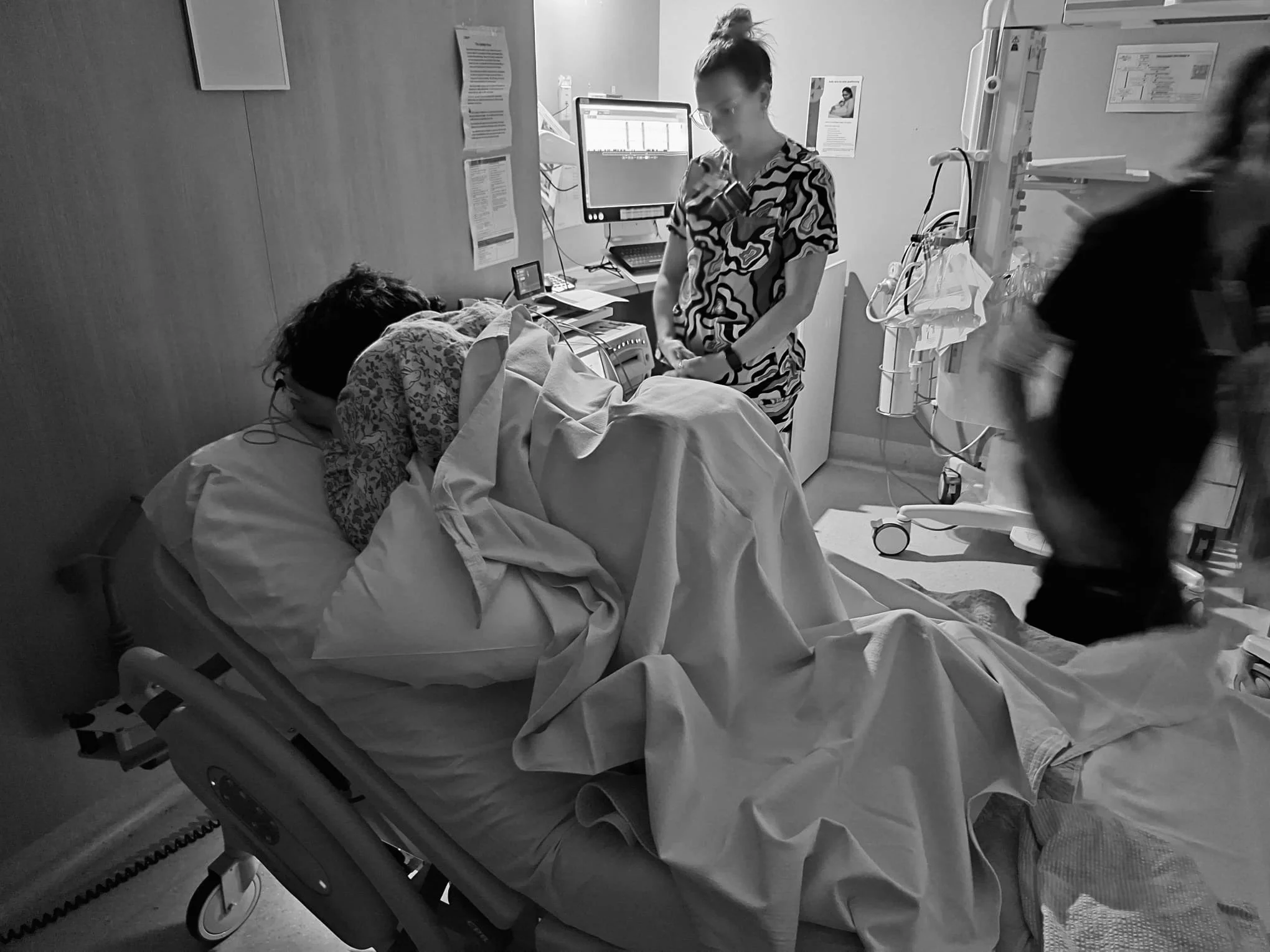
What Support Is Available During Labour and After Birth?
Pregnancy appointments are only one part of maternity care. It is equally important to understand what happens when labour begins and during the early weeks with your baby.
In public hospital care, support is generally provided by the maternity team on duty. Depending on the service, you may also be eligible for home visits after discharge.
In private obstetric care, hospital midwives provide labour support, with the obstetrician involved according to your needs and the practice’s arrangements. Postnatal care commonly includes hospital care and a follow-up appointment, with additional support varying by provider.
Private midwifery arrangements differ between practices. Some include contact with a midwife during early labour, ongoing labour support and home visits after birth.
At MAMA, support includes access to a midwife through 24/7 telephone triage and visits during early labour when clinically appropriate. For hospital births, your MAMA midwife provides support at home before accompanying you to hospital as an independent support person, while the hospital team provides clinical care. For planned homebirths, two MAMA midwives attend.
Postnatal care is also part of MAMA’s full-care packages. This includes four home visits during the first week after birth, or two for returning clients, and unlimited clinic appointments up to six weeks postnatally.
When comparing providers, check how long postnatal support continues, where appointments take place and whether additional visits or services incur extra fees.
Public vs Private Maternity Care: What About Cost?
Cost is an important consideration, but comparing fees accurately means looking at the services included. However, some associated expenses may apply, depending on the services used.
Private maternity care involves out-of-pocket costs that vary by provider and model.
Before committing, ask for a written breakdown covering:
Antenatal appointments and clinical assessments.
Labour and birth support.
Postnatal appointments and home visits.
On-call availability and telephone support.
Medicare rebates and potential insurance contributions.
Any additional fees if your care needs change.
MAMA offers full-care packages covering defined elements of pregnancy, birth and postnatal care. Understanding what is included can help you compare the total cost with other arrangements, rather than looking at the initial fee alone.

How Do You Choose the Right Maternity Care Option?
Start with your priorities, then compare the practical arrangements offered by each provider.
Consider whether you prefer public hospital care, a continuity-focused public program, private obstetric care or private midwifery. Think about your preferred birth setting, the people you want involved in your care, the support you would like after birth and the costs you can manage.
You do not need to have every detail of your birth plan decided before choosing a provider. What matters is understanding your available options and knowing how each model works.
Explore Private Midwifery in Melbourne
If you’re considering private midwifery, MAMA provides care across pregnancy, labour, birth and the postnatal period, with a primary midwife supported by a wider team.
Our model includes 24/7 triage, early labour support when needed, and postnatal care through home visits and clinic appointments. Families planning a hospital birth or an eligible planned homebirth can explore the arrangements that apply to their circumstances.
You can learn more about our services on the MAMA Midwifery Care page.
If you are still weighing up your options, a Discovery Appointment offers an opportunity to discuss your circumstances, ask questions and learn more about private midwifery before deciding whether it is right for you. There is no obligation to book ongoing care.
The aim is not to choose public or private care based on the label alone. It is to understand who will care for you, what support is available and which arrangements best fit your needs.